
Lift Safe.
Work Safe.
HSA-compliant manual handling certificate online. Lessons in English and Romanian.
Certifying a team? Get bulk pricing →8 In-depth Lessons
Science, law, technique, environment & fatigue
Knowledge Checks
Short questions after every lesson
Final Quiz
15 questions · 80% pass mark
Certificate
Issued by your trainer, same day



Watch & Learn
Work through 8 lessons with video demonstrations. Text in English and Romanian.
Film Your Lift
Record a short video of yourself lifting a box correctly. Upload from your phone.
Get Certified
Your trainer reviews and approves. Certificate issued same day before 5pm.
SafeHandle Professional · S.I. No. 299 of 2007 · QQI Level 6
Powered by A1ROEnter your details before beginning. These will appear on your certificate once your trainer approves your submission.
Why Manual Handling Matters
Manual handling injures ~30% of Irish workers and costs employers over €500M annually.
What is manual handling?
Manual handling is any activity requiring a person to use bodily force to lift, lower, push, pull, carry, move, hold or restrain a load — an object, a person, or an animal. Under S.I. No. 299 of 2007 it is legally defined as: “any transporting or supporting of a load by one or more employees… which, by reason of its characteristics or of unfavourable ergonomic conditions, involves a risk, particularly of back injury, to employees.”
Manual handling is so routine in operational roles that many workers perform it on autopilot. That normalisation is precisely why it causes such widespread and serious injury.
Scale of the problem
The hidden iceberg
HSA figures capture only reported injuries. Research shows that for every reported manual handling injury, several more go unreported — because workers minimise symptoms, fear consequences, or because the injury develops gradually with no single incident. The true scale is significantly higher than official statistics suggest.
Who is at risk?
- 🏭Warehouse and logistics workers — high-frequency lifting in time-pressured environments, varying load weights, fatigue compounding across long shifts
- 🚙Drivers and delivery workers — loading/unloading from vehicle height, often alone, in variable outdoor conditions without ergonomic infrastructure
- 🏗Construction and trades — heavy irregular materials on uneven surfaces in confined spaces
- 🏥Healthcare and social care — patient handling is among the most complex and highest-risk manual handling category; loads are unpredictable and can resist
- 🛒Retail and hospitality — repetitive light-to-medium loads in cramped stockrooms under time pressure
The human cost
This is not abstract
A serious back injury can mean months off work, chronic pain, permanent disability, loss of income, and a dramatically reduced quality of life. Approximately 10–15% of serious occupational back injuries result in some degree of permanent functional limitation — meaning the worker never returns to physically demanding work. No task is worth this risk when correct technique prevents it.
- 🛌Weeks or months of severe pain — disc herniations cause intense radiating pain making basic activities genuinely difficult
- 💰Significant income loss — extended absence creates financial pressure; many workers cannot return to the same role
- 🧠Psychological impact — chronic pain is a major contributor to anxiety and depression; workers report reduced quality of life and loss of professional identity
- ↻Permanent limitation — ~10–15% of serious occupational back injuries leave some permanent functional limitation
Anatomy, Spine Mechanics & How Injuries Happen
Understanding the structures at risk and the precise mechanisms by which they fail is the foundation of consistent, motivated safe practice.
The vertebral column
The spine consists of 33 vertebrae in five regions. For manual handling, the lumbar spine (L1–L5) is most critical — it bears the greatest compressive and shear forces and is where the majority of serious occupational injuries occur.
C1–C7
T1–T12
L1–L5
S1–S5 fused
Intervertebral discs — the critical components
- ◯Nucleus pulposus (inner core) — a gel-like substance (~88% water) that distributes compressive load evenly when the spine is in neutral. This hydraulic distribution is what makes the neutral spine position so protective.
- ↻Annulus fibrosus (outer ring) — multi-layered fibrocartilage in crossed diagonal bands. Contains the nucleus and resists tensile and rotational forces. This outer ring is what cracks or ruptures in a herniation.
How disc herniation happens
When the spine flexes forward (rounds) under load, the nucleus pulposus is forced posteriorly — toward the nerve roots. The posterior annulus bears enormous concentrated stress. If it ruptures, protruding nucleus material impinges on adjacent nerve roots, causing severe local pain, radiating leg pain (sciatica), numbness, tingling, and in serious cases muscle weakness or loss of bladder/bowel control.
The lever arm principle
Your spine acts as a fulcrum. The erector spinae muscles (attaching ~5cm from the spine) must generate forces 10–20× the weight of the load to counteract even modest loads held at a distance. A 10 kg load at arm's length (30cm) generates 300–500 kg of compressive force at L4–L5. The same load held close to the body (5cm) generates ~100–150 kg — a 60–70% reduction. This is the single most impactful mechanical change available to you during a lift.
Intra-abdominal pressure
Correct core engagement (breathing out steadily during the exertion phase) creates intra-abdominal pressure — an internal splint reducing lumbar disc load by 20–40%. Never hold your breath during a lift: the Valsalva manoeuvre elevates blood pressure dangerously while providing only marginal additional support.
Body areas at risk
Disc herniation from flexion under load; facet joint impingement from hyperextension; muscle tears. Most common and most serious manual handling injury.
Rotator cuff tears from overhead lifting or lateral reaching; bursitis from repetitive overhead compression. Often requires surgery.
Disc compression from asymmetric loads or forward head posture. Can cause cervical radiculopathy — pain radiating into arm and hand.
Meniscal damage from deep squatting under load; patellofemoral syndrome from repetitive knee flexion.
Carpal tunnel syndrome and de Quervain's tenosynovitis from repetitive gripping and twisting — typically cumulative over months.
Inguinal hernias from excessive intra-abdominal pressure during heavy lifts, especially with breath-holding.
Acute vs cumulative injury
- ⚡Acute injury — single incident causes immediate identifiable damage. A disc herniation from one bad lift, a rotator cuff tear from catching a falling object. Easy to identify but can have permanent consequences.
- ↗Cumulative (repetitive strain) injury — builds gradually over weeks, months or years of slightly suboptimal technique. Workers often normalise progressive symptoms until a threshold is crossed. Accounts for a large proportion of occupational MSDs and is often far advanced before reported.
Early warning signs — never ignore these
- Aches that correlate with work (worse end-of-week, better after rest)
- Morning stiffness taking more than 20–30 minutes to resolve
- Pins and needles in arms or legs after a shift
- Pain appearing earlier in the shift than it used to
These are signals of ongoing tissue damage. Report them. Early physiotherapy at this stage is far more effective than waiting until the injury is acute.
Diurnal disc variation — why the first hour is highest risk
Discs rehydrate overnight, reaching peak hydration (and peak internal pressure) in the morning. This makes them more susceptible to herniation under load in the first hour of a shift. Warm up thoroughly and perform lighter tasks at the start of every shift — this is evidence-based injury prevention.
Hazard Identification & the Control Hierarchy
Identifying what makes a task dangerous and knowing how to systematically reduce that risk is a core operational skill governed by Irish law.
Watch: The TILE Risk Assessment
Before reading on, watch this short explanation of how to apply the TILE framework before any lift.
Hazard categories in manual handling
- 📦Load hazards — too heavy, too bulky, unstable contents, no handles, sharp edges, hot or cold surfaces, unknown weight
- 🏗Task hazards — sustained forward bending, twisting, reaching above shoulder or below knee, high repetition, prolonged static holding, confined space
- 🌎Environmental hazards — wet/uneven/cluttered floor, poor lighting, extreme temperature, steps or ramps along the carry route
- 👤Individual hazards — fatigue, injury, pregnancy, young worker (under 18), health condition affecting capacity, movement-restricting PPE
The TILE risk assessment framework
Assess the nature of the activity before starting:
- Does it require twisting, bending, or reaching?
- How frequently is it repeated, and for how long?
- Does it involve sustained static holding?
- How far must the load be carried?
- Are there changes in level — steps, ramps, vehicle beds?
- Does it require high or unpredictable force?
Consider the capability of the person doing the task right now:
- Current fitness and physical capability
- Existing injury, chronic pain, or health condition
- Level of training and experience
- Accumulated shift fatigue and sleep deprivation
- Emotional stress or distraction
- Pregnancy (second and third trimester)
- Return to work after illness or injury
Systematically assess the load before touching it:
- Known or estimated weight
- Stability — will contents shift?
- Shape — can you grip correctly?
- Handles or grip points available?
- Surface condition: wet, greasy, sharp?
- Temperature extremes
- Hazardous contents?
Assess the physical conditions where the task takes place:
- Floor surface — wet, uneven, sloped?
- Adequate space for correct posture?
- Temperature — extreme heat or cold?
- Lighting adequate to identify hazards?
- Ventilation and air quality
- Obstacles along the carry route
The STOP rule
If any TILE factor increases risk beyond what you can manage safely — stop. Ask for help, use mechanical assistance, clear the environment, or escalate to your supervisor. You have both a legal right and a legal duty to refuse tasks that pose serious risk to your health.
HSA weight guidelines
| Worker | Close to body | Away from body | Extended reach |
|---|---|---|---|
| Adult male (fit, trained) | 25 kg | 16 kg | 10 kg |
| Adult female (fit, trained) | 16 kg | 10 kg | 7 kg |
| Young worker (16–18) | Significantly reduced — individual risk assessment required | ||
| Pregnant worker | Substantially reduced from 2nd trimester — occupational health assessment required | ||
Critical limitation
These guidelines assume: load is compact and close to the body, lift is infrequent (<30×/hour), worker is fit and rested, conditions are good, posture is correct. Any deviation requires the effective guideline weight to be reduced.
The control hierarchy
Remove the task entirely
Automate, mechanise, or reorganise to remove manual handling altogether. Examples: automated conveyors, robotic picking, storage optimisation so items arrive at point of use.
Replace with a safer alternative
Change the load or method to reduce risk. Examples: smaller packaging units, lighter building materials, pre-portioned catering containers.
Mechanical aids and workspace design
Pallet trucks, sack trolleys, scissor lift tables, hoists, conveyors, adjustable workbenches, ergonomic storage at optimal heights (mid-thigh to mid-chest).
Change how work is organised
Job rotation, mandatory rest breaks, shift length limits, team lifts, formal TILE assessments before new tasks, supervisor monitoring of technique.
Last resort only
Gloves, knee pads, back support belts. PPE does not reduce mechanical forces on the body — it addresses secondary hazards only. Back belts have limited evidence of preventing injury and must never be presented as a primary control.
Irish Law, Enforcement & Your Rights
Manual handling is extensively regulated. Understanding the specific legislation, employer and employee duties, and enforcement mechanisms protects both you and your employer.
The legislative framework
- 🏛Safety, Health and Welfare at Work Act 2005 — primary Irish OHS legislation. General duties of employers (Section 8), employees (Section 13). Section 27 protects employees from penalisation for exercising safety rights.
- 📋S.I. No. 299 of 2007 — General Application Regulations — Regulations 68–72 (Chapter 4, Part 2) are the specific manual handling requirements. Transposes EU Directive 90/269/EEC into Irish law. Applies to all workplaces without exception.
- 🇪🇺EU Directive 90/269/EEC — the European framework on which the Irish regulations are based. Establishes minimum requirements across all member states.
Employer obligations — Regulations 68–72
- 📝Written risk assessment (Reg 68) — documented TILE-based assessment of all manual handling tasks presenting injury risk. Must be reviewed when circumstances change.
- 🔧Reduce risk (Reg 69) — where manual handling cannot be eliminated, organisational measures or mechanical aids must reduce injury risk to the lowest reasonably practicable level.
- 🏫Training and information (Reg 70) — all employees must receive training before beginning manual handling and at regular intervals. The HSA recommends every 3 years. Must include: safe techniques, approximate load weights, centre of gravity information, and the specific risks involved.
- 🏥Health surveillance (Reg 71) — where significant ongoing risk is identified, appropriate health monitoring must be provided for affected workers.
Common HSA inspection findings
- No written manual handling risk assessment
- Risk assessment not reviewed in over 3 years
- No training records for workers performing manual handling
- New or agency workers assigned to lifting tasks without induction training
- Mechanical aids available but workers not trained to use them
Your rights and duties
- 📚Apply your training (duty) — you are legally required to use the safe manual handling techniques you have been trained in, consistently and correctly
- 🔔Report hazards immediately (duty) — wet floors, damaged equipment, overloaded shelving, inadequate lighting — report without delay
- ⛔Right to refuse dangerous work (Section 27) — full legal protection from penalisation for refusing any task posing serious and immediate danger. Complaints go to the Workplace Relations Commission (WRC).
- 📋Right to load information (Reg 70) — you have the right to know the approximate weight and centre of gravity of every load you handle
Enforcement and civil liability
The HSA can issue Improvement Directions, Prohibition Notices, and prosecute employers (District Court up to €3,000 per offence; Circuit Court up to €3,000,000 per offence + imprisonment). Civil claims for serious back injuries in Ireland typically range from €80,000–€500,000+. The business case for prevention is unambiguous.
15 questions covering all four theory lessons. You need 12/15 (80%) to pass. Detailed feedback after each answer.
Lifting, Carrying & Lowering — Core Technique
Knowing the technique in theory is not enough. This lesson explains the mechanics behind each step so you understand why it matters — the only way to apply it consistently.
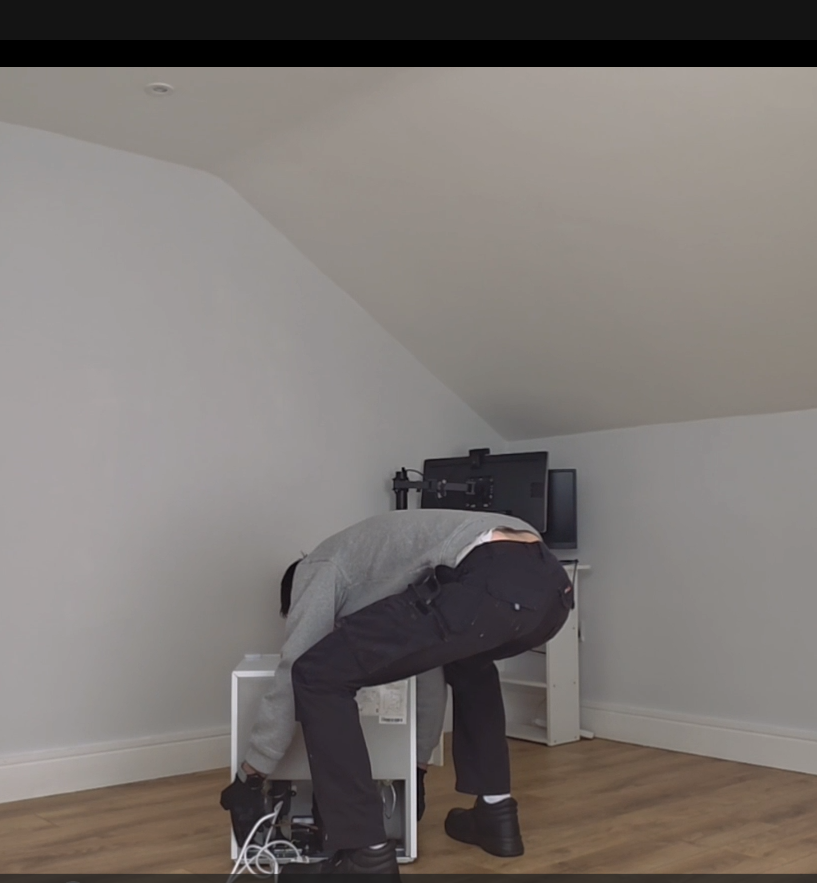
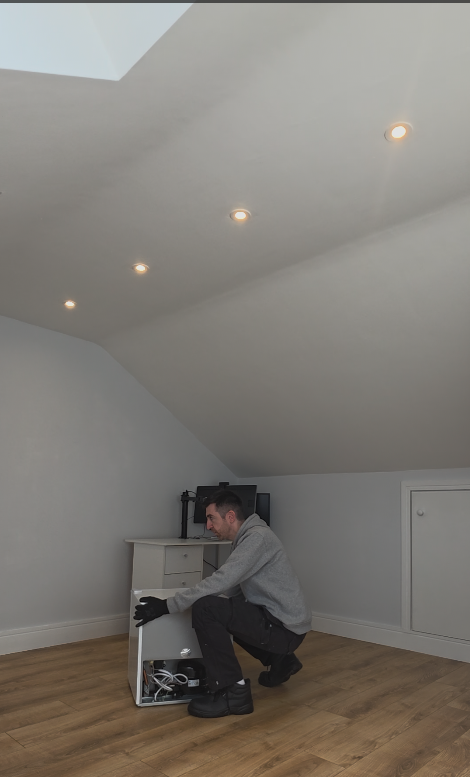
Watch: Incorrect vs Correct Lift
Watch both clips before reading on. The wrong technique is shown first so you can see exactly what to avoid — then the correct technique immediately after.
Key things to spot
Compare the spine position at the bottom of each lift — straight vs rounded. Notice how close the load is to the body in the correct version. Watch how the feet move to change direction instead of the torso twisting. These three things are the difference between a safe lift and an injury.
Pre-lift assessment — 10 seconds that prevent injury
- ⚖Test the weight first. Before committing to any lift, push or tilt the load gently to gauge its actual weight and check for shifting contents. Never assume a load is the weight you expect.
- 👀Assess the load fully. Does it have handles? Is the surface clean and dry? Could contents shift during the carry?
- 🗺Plan the route. Walk it if unfamiliar. Check for level changes, obstacles, doors. Know exactly where the load is going before you lift it.
- 🤝Decide on assistance. Is this within your safe capacity in these conditions right now? Is there a trolley or mechanical aid available?
- 👕Check clothing and footwear. Non-slip closed-toe footwear. Gloves appropriate to the load surface. Loose clothing cleared of obstructions.
Never skip the weight test
Testing the weight is a non-negotiable pre-lift step — even for loads you've lifted before. Contents change. Labels are wrong. A load that catches you off-guard mid-lift is one of the most common causes of acute back injury. Push or tilt first, every time.
The 8 steps of a safe lift
Foot position
Stand close to the load, feet shoulder-width apart, one foot slightly forward (staggered stance). Broad base of support, lowers centre of gravity, allows forward weight shift. Toes slightly outward for knee tracking.
Hip hinge and knee bend
Lower by bending both hips and knees simultaneously — a partial squat (knees ~90°), not a deep squat. Think "sit back" not "bend down". Uses quadriceps and gluteus maximus — the most powerful muscle groups in the body.
Neutral spine — the most critical element
Maintain the spine's natural S-curve throughout. Never allow lumbar rounding (primary cause of disc herniation) or excessive arching (increases facet joint compression). Chin slightly tucked, gaze forward and slightly down.
Full-palm grip, both hands
Use the full palm of both hands. Never fingertip grip — poor control, enormous strain on flexor tendons. If the load lacks adequate grip points, reassess the approach before proceeding.
Draw load to body before rising
Pull the load against your body — thigh or abdominal contact if possible. This single step can reduce lumbar compressive forces by 50–70%. If the load is too bulky to hold this close, a different approach (team lift, mechanical aid, re-packaging) is required.
Smooth leg drive — breathe out
Push through the heels, extending hips and knees simultaneously. A leg press, not a back lift. Smooth and controlled — jerking creates unpredictable peak forces. Breathe out steadily through the exertion phase. Never hold your breath.
Move feet to turn — never twist
Once upright: take small steps to reorient your whole body before placing the load. Never rotate the trunk while holding a load. This is the cardinal rule — no exceptions. Hips, shoulders, and feet always face the same direction.
Lower with the exact reverse technique
Bend hips and knees, neutral spine, load close, controlled movement. Many injuries occur during lowering because workers relax technique at the end of a task. "Lower it like you lifted it" — every single time.
Correct vs Incorrect: At a Glance
Carrying technique and warm-up
- 📍Maintain load contact — fatigue causes loads to drift away from the body mid-carry, dramatically increasing lumbar loading. Consciously maintain contact throughout.
- 🚪Opening doors — set the load down, open the door, prop if possible, then lift and proceed. Never twist while holding a load to open a door.
- ⚖Avoid one-sided carries — creates lateral spinal flexion and asymmetric loading. Use both hands or alternate sides regularly.
Shift warm-up (5 minutes)
Hip circles (10×), cat-cow stretch (10×), glute bridges (15×), bodyweight squats (15×), shoulder rolls. Even with this warm-up, avoid maximum-capacity lifts in the first 30 minutes of a shift. Evidence-based — not optional.
Task-Specific Manual Handling Techniques
The standard lift is only one of many manual handling tasks. Pushing, pulling, team lifts, floor-level and overhead work all require specific adaptations.
Pushing vs pulling
Pushing (preferred)
Safer — body's larger muscle groups engage effectively, load is visible and controllable.
- Handles at approximately waist height (0.9–1.1m)
- Both hands, elbows bent ~90°, close to body
- Use leg drive — push comes from walking forward
- Ensure route is clear ahead
Pulling (higher risk)
Mechanically disadvantaged — back muscles overloaded, load can gain momentum and pull the worker over.
- Stand close — never pull from arm's length
- Never walk backwards on steps or ramps while pulling
- If heavy and wheeled, walk to far end and push instead
- Wheeled loads on slopes — ensure you can control speed
Push/pull force limits
Initial break-away force above 20 kg (196 N) or sustained force above 10 kg (98 N) warrants engineering controls: better wheels, smoother floor surfaces, or smaller loads.
Floor-level and overhead lifts
- 🏋Deep squat (floor-level compact loads) — straddle the load, bend knees and hips deeply, load between the knees, neutral spine throughout, drive up through heels
- 🦷Golfer's lift (awkward low access) — one knee on the floor as a stable platform, back neutral, less leg force required. Used for bottom of deep bins, rear of low vehicle beds
- ⬆Overhead lifts — stage don't heave — never lift directly from floor to overhead. Stage: floor to waist, reposition, waist to shelf. Guideline weight above shoulder height is ≤5–7 kg without mechanical assistance.
- 🚫Never use stepladders while holding a load — use wheeled platforms, mobile scaffold, or mechanical hoists for elevated placements
Team lifting
- 👑Designate one leader — calls all movements: "Ready? Lift on three… one, two, three — lift." All movements simultaneous on the call.
- 📏Match lifter heights where possible — height difference causes unequal load distribution and compromised posture for the taller worker
- ⚖Two-person limit is NOT double the individual limit — approximately 2/3 of combined individual limits due to coordination inefficiency. Male + male: ~33 kg; male + female: ~27 kg
- 💬Communicate continuously — call hazards, direction changes, "set down" warnings. Plan door and obstacle navigation in full before the lift begins.
Awkward, irregular, and asymmetric loads
- 📏Long items (pipes, planks, ladders) — carry on one shoulder with one hand stabilising the front end, or two-person carry one at each end. Never carry at an angle endangering others.
- 👔Flexible loads (sacks, bags) — contents can shift suddenly. Grip so the load is held against the body, not swinging. Never throw or catch flexible loads.
- ⚖Asymmetric loads — position yourself so the heavier end is closest to the body. Check for internal weight markings indicating heavy-end orientation.
Environmental Conditions & Human Fatigue Factors
Environmental conditions and fatigue are among the most underestimated contributors to manual handling injury. A trained worker with correct technique in poor conditions is still at elevated risk.
Watch: Environmental Hazards
Watch this walkthrough of real environmental risk factors before reading the detail below.
Environmental conditions — specific effects on injury risk
Cold environments
Cold reduces muscle performance and connective tissue elasticity. Cold muscles produce force less efficiently and are more prone to tearing. In cold stores (<5°C) or outdoor winter conditions: extended warm-up, frequent movement breaks, 20% weight reduction, thermal clothing that allows full range of motion.
Hot environments
Heat causes accelerated dehydration, directly affecting disc hydration (discs are ~88% water). Also causes cardiovascular stress and accelerated muscle fatigue. Min 500ml/hour hydration in high-heat conditions. Frequent rest breaks. Monitor for heat exhaustion: dizziness, nausea, confusion.
Wet and slippery surfaces
A slip or stumble while carrying a load causes sudden uncontrolled movement the body has no time to brace against. Report and clean spills immediately. Anti-slip matting at wet areas. Slow down on any surface not confirmed dry and clean.
Confined spaces
Confined spaces force compromised postures from which correct technique is impossible. Low headroom, narrow aisles, and restricted access all prevent stable stance, neutral spine, or load close to body. Reduce load weight, use long-reach handles, report chronic confined-space requirements as hazards requiring engineering controls.
Poor lighting
Inadequate lighting impairs hazard perception — uneven surfaces, steps, and load instability harder to identify. Minimum 200 lux for manual handling areas (300–500 lux for precision tasks under Irish standards). Report inadequate lighting immediately.
Wind and outdoor conditions
Wind loading on large flat items (panels, sheets, doors) causes sudden destabilising forces. Large flat items should never be carried in strong wind — they act as sails. Two-person carry for large flat items regardless of weight.
Fatigue — the silent multiplier of injury risk
- ⬇Technique degradation — trunk stabilising muscles (transversus abdominis, multifidus) lose endurance before primary lifting muscles. A fatigued worker's technique deteriorates measurably within a shift even when they feel they are performing correctly.
- ⏱Reduced reaction time — when a load shifts unexpectedly or a foot slips, the neuromuscular response time to compensate is reduced. Most acute injuries from load control loss occur in the latter half of shifts.
- ↓Impaired risk perception — fatigued workers are measurably worse at identifying hazards and consistently underestimate risk. The state that increases injury risk simultaneously impairs the ability to recognise it.
Shift length and injury rates
Injury rates increase non-linearly toward the end of long shifts. Mandatory task rotation (no single repetitive manual task for more than 2 consecutive hours) and scheduled rest breaks (minimum 15 minutes per 2 hours of manual work) are safety-critical administrative controls.
Mental health and psychological factors
- 😨Stress increases background muscle tension — chronic psychological stress produces continuous low-level activation of trapezius and paraspinal muscles, which start each task partially fatigued and more prone to strain
- ⏱Time pressure is a major risk factor — workers under production quotas or delivery targets rush lifts, skip TILE assessments, don't use available mechanical aids. Time pressure appears consistently in investigation reports for serious manual handling injuries.
- 😴Sleep deprivation — irregular shifts (common in logistics, healthcare, security) impair cognitive function, slow reaction times, and reduce pain tolerance — all directly increasing manual handling injury risk
If you are experiencing these factors
Time pressure, fatigue, or stress affecting your ability to perform manual handling safely is a safety-relevant operational observation, not a complaint. Report it. Safety representatives and occupational health services exist precisely to address these conditions.
11 statements covering the complete safe lift sequence. Confirm whether you understand and would apply each step. You need 10/11 to pass.
Upload a short video of yourself performing a complete box lift. Your submission will be reviewed by your QQI Level 6 Manual Handling Instructor. Certificates are issued same day for submissions received before 5pm.
What your video must show
- 0️⃣Test the weight — push or tilt the load before lifting to gauge its weight and check for shifting contents. This must be visible in your video.
- 1️⃣Pre-lift pause — visibly assess the load before lifting (demonstrates TILE awareness)
- 2️⃣Foot placement — shoulder-width, one foot forward, close to the load
- 3️⃣Neutral spine throughout — no rounding at any point during lift or lower
- 4️⃣Knee and hip bend — descent driven from the legs, knees ~90°
- 5️⃣Load close to body — drawn in before rising, maintained throughout carry
- 6️⃣Smooth leg drive upward — controlled, no jerking
- 7️⃣Feet used to turn — small steps to reorient, no trunk rotation
- 8️⃣Controlled lowering — same technique in reverse, no forward waist-bend
Common mistake — don't skip this
Many candidates forget to test the weight of the load before lifting in their video. Push or tilt the load first so it's clearly visible on camera — your trainer will be looking for this as a scored step.
Drop your video here or click to browse
MP4, MOV or WebM · Maximum 200MB · 15–90 seconds
Full body visible
Head to feet at all times
Good lighting
No strong backlighting
15–90 seconds
Full sequence: pause, lift, carry, turn, lower
Real weighted load
Don't mime the lift